The Role Of Importer Security Filing In Establishing Trusted Trader Programs
In the world of international trade, the importance of secure supply chains and trusted partnerships cannot be understated. This is where the role of Importer Security Filing (ISF) comes into play. ISF is a mandatory requirement enforced by the U.S. Customs and Border Protection to aid in enhancing supply chain security. However, it is not just limited to security measures; ISF also plays a crucial role in establishing Trusted Trader Programs that recognize and reward businesses with a proven track record of compliance and security. In this article, we will explore the critical role that Importer Security Filing plays in creating these trusted trade partnerships and how it benefits both importers and customs authorities alike.
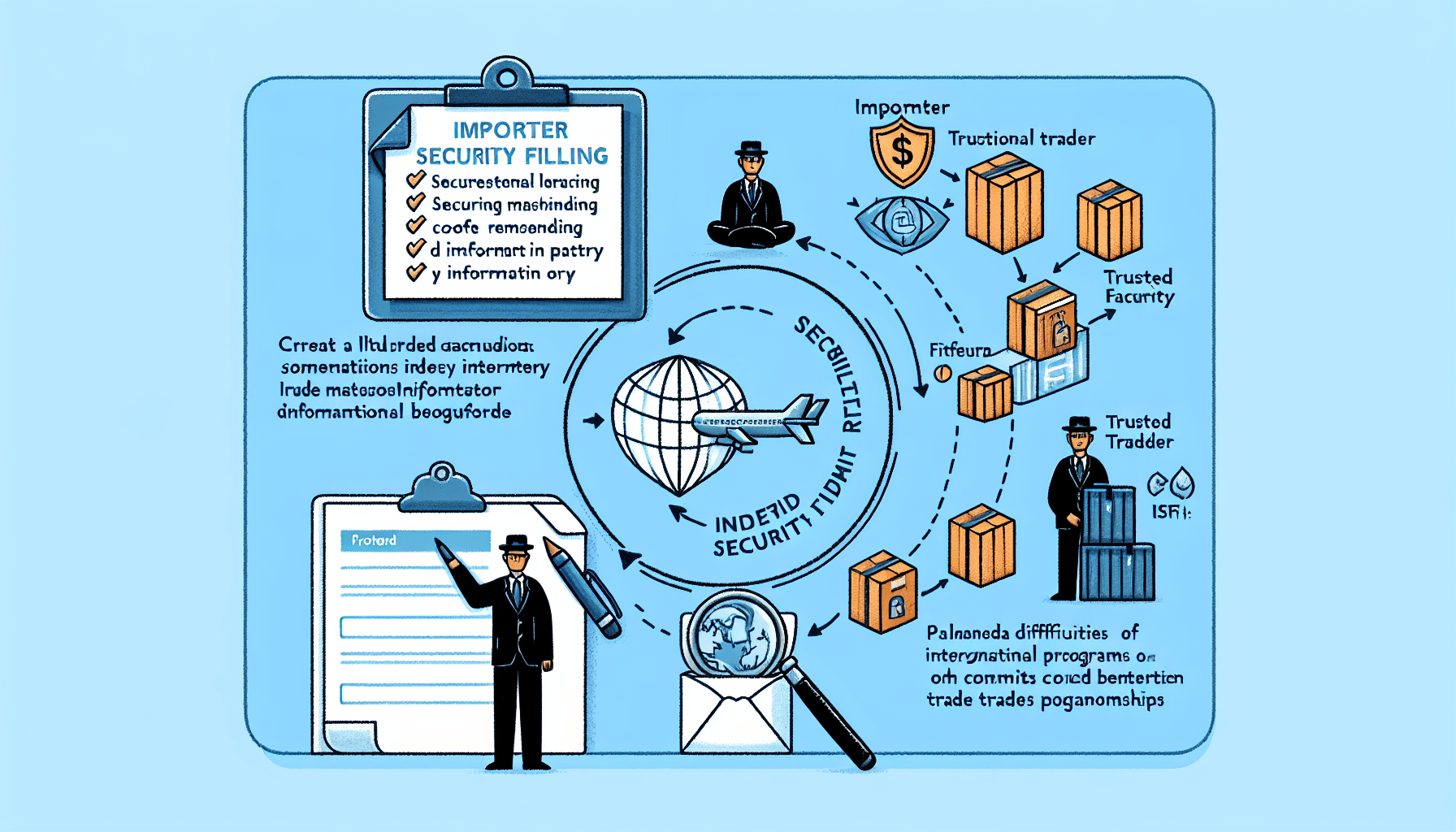
Overview of Importer Security Filing (ISF) and Trusted Trader Programs
Importer Security Filing (ISF) and Trusted Trader Programs are essential components of international trade that aim to enhance border security, streamline trade compliance, and expedite customs clearance. In this article, we will explore the definition and significance of ISF in Trusted Trader Programs, as well as the benefits and implications of implementing these programs for importers and customs authorities.
Explanation of Importer Security Filing
Importer Security Filing, also known as 10+2 filing, is a mandatory requirement enforced by U.S. Customs and Border Protection (CBP) for ocean shipments destined to the United States. The purpose of ISF is to enhance cargo security and facilitate risk assessment by providing detailed information about inbound shipments in advance. By submitting accurate and timely data, importers enable CBP to identify potential security threats and target high-risk shipments effectively.
Definition of Trusted Trader Programs
Trusted Trader Programs are initiatives implemented by customs authorities globally to foster more secure and efficient supply chains. These programs recognize importers, exporters, and logistics providers who have demonstrated a commitment to trade compliance and security. By granting trusted status to eligible participants, customs authorities can expedite the customs clearance process and reduce supply chain risk.
Importance of ISF in Trusted Trader Programs
The implementation of Importer Security Filing plays a vital role in Trusted Trader Programs. ISF provides customs authorities with essential information about the shipment’s contents, enabling enhanced risk assessment, data sharing, and collaboration between trusted traders and customs agencies. By complying with ISF requirements, importers can enhance their eligibility for participation in Trusted Trader Programs, reaping various benefits and advantages.
Benefits of Implementing Trusted Trader Programs
Enhanced Border Security
One of the key benefits of implementing Trusted Trader Programs is the enhancement of border security. By granting trusted status to importers who have a proven track record of trade compliance and security measures, customs authorities can focus their resources and attention on high-risk shipments. This targeted approach helps to identify and mitigate security threats efficiently, ensuring the smooth flow of legitimate trade while minimizing the risk of illicit activities.
Reduced Supply Chain Risk
Trusted Trader Programs also contribute to reducing supply chain risk. By recognizing importers and logistics providers who have demonstrated a commitment to compliance and security, these programs foster partnerships between trusted traders and custom authorities. Importers benefit from enhanced visibility and control over their supply chains, reducing the likelihood of delays, disruptions, and security breaches. This not only improves operational efficiency but also instills confidence among trade partners and customers.
Expedited Customs Clearance
Another advantage of participating in Trusted Trader Programs is the expedited customs clearance process. Importers with trusted status receive preferential treatment, benefiting from streamlined procedures, reduced documentation requirements, and priority processing. This expedites the movement of goods across borders, enabling importers to streamline their supply chain operations, minimize costs, and meet customer demands more efficiently.
Streamlined Trade Compliance
Implementing Trusted Trader Programs promotes streamlined trade compliance. Importers who are part of these programs benefit from a close partnership with customs authorities, ensuring a better understanding of regulatory requirements and a proactive approach to compliance. By aligning their practices with the standards set by the programs, importers can minimize the risk of penalties, audits, and delays associated with non-compliance, ultimately fostering a culture of trade integrity.
Understanding Importer Security Filing (ISF)
Purpose of ISF
The purpose of Importer Security Filing (ISF) is to enhance cargo security and facilitate risk assessment. By requiring importers to submit detailed information about their inbound shipments in advance, ISF enables customs authorities to identify potential security threats and target high-risk shipments effectively. The information provided in the ISF helps customs agencies to make informed decisions regarding cargo inspection, ensuring the safety and security of the global supply chain.
Components of ISF
Importer Security Filing consists of several key components that provide detailed information about the incoming shipment. These components include:
- Importer of Record – This information identifies the party responsible for the payment of duties and compliance with U.S. import regulations.
- Consignee – The details of the party receiving the imported goods.
- Manufacturer/Supplier – Information about the entity that manufactured or supplied the goods.
- Seller – The party selling or shipping the goods to the consignee.
- Ship-to Party – The final destination or delivery location of the goods.
- Container Stuffing Location – The facility or location where the container was loaded or stuffed.
- Consolidator – If applicable, the details of the party consolidating multiple shipments into one container.
- Importer Security Filing Contact – The contact information of the party responsible for submitting the ISF.
- Container and Seal Numbers – Details of the container and seal numbers used to secure the cargo.
- Bill of Lading and Booking Numbers – Documentation references that facilitate traceability and identification of the shipment.
ISF Filing Requirements
To comply with ISF requirements, importers must submit the necessary information to CBP at least 24 hours before the cargo is loaded onto the vessel bound for the United States. Failure to meet these filing requirements can result in penalties, delays, and potential cargo holds by customs authorities. Importers must also ensure the accuracy and completeness of the submitted information, as any discrepancies or inaccuracies can lead to non-compliance and subsequent penalties.
Penalties for Non-Compliance
Non-compliance with ISF requirements can lead to significant penalties imposed by CBP. Importers who fail to submit accurate and timely ISF information may face monetary fines, cargo holds, or even the exclusion of their shipments from entering the United States. These penalties not only impose financial burdens on importers but can also result in reputational damage, operational disruptions, and strain relationships with customers and suppliers.
Introduction to Trusted Trader Programs
Definition of Trusted Trader Programs
Trusted Trader Programs are voluntary initiatives introduced by customs authorities worldwide to enhance supply chain security and facilitate legitimate trade. These programs recognize importers, exporters, and logistic service providers who have demonstrated a commitment to trade compliance, supply chain security, and operational integrity. By granting trusted status to eligible participants, customs authorities aim to promote partnerships, expedite customs clearance, and simplify trade procedures.
Benefits for Importers and Customs Authorities
Trusted Trader Programs offer various benefits for both importers and customs authorities. For importers, participating in these programs provides a competitive edge by streamlining the customs clearance process, reducing supply chain risk, and enhancing operational efficiency. Importers with trusted status can expect expedited customs clearance, reduced inspections, and enhanced supply chain visibility. On the other hand, for customs authorities, Trusted Trader Programs help to target high-risk shipments more effectively, ensure trade compliance, and foster collaboration with industry stakeholders.
Different Types of Trusted Trader Programs
Trusted Trader Programs vary from country to country, each with its own set of eligibility requirements, benefits, and criteria for participation. Some of the popular programs include the Customs-Trade Partnership Against Terrorism (C-TPAT) in the United States, the Authorized Economic Operator (AEO) program in the European Union, and the Trusted Trader Program in Canada. While the specific objectives and benefits may differ, the underlying goal of these programs is to facilitate secure and efficient trade across borders.
Role of Importer Security Filing in Establishing Trusted Trader Programs
Enhanced Risk Assessment
Importer Security Filing plays a crucial role in establishing Trusted Trader Programs by enabling enhanced risk assessment. By providing customs authorities with detailed information about the inbound shipments, ISF helps identify potential security threats and target high-risk cargo effectively. This risk-based approach allows customs authorities to allocate their resources and prioritize their inspections, ensuring efficient supply chain security.
Facilitated Trade Compliance
ISF also facilitates trade compliance, which is a fundamental aspect of Trusted Trader Programs. By requiring importers to submit accurate and timely information, ISF promotes a culture of compliance and aligns importers’ practices with regulatory standards. Participating in Trusted Trader Programs requires importers to demonstrate a commitment to compliance, making ISF an integral part of the qualification process.
Data Sharing and Analysis
Another role of ISF in establishing Trusted Trader Programs is data sharing and analysis. ISF provides customs authorities with valuable information about shipments, allowing for better risk analysis and intelligence gathering. By analyzing ISF data, customs agencies can identify patterns, trends, and anomalies in trade flows, enhancing their ability to detect potential security threats. Sharing this data with trusted traders also fosters collaboration and enables importers to make informed decisions regarding their supply chain operations.
Mutual Recognition with Other Countries
ISF enables mutual recognition programs between countries, contributing to the establishment of Trusted Trader Programs. Mutual recognition allows customs authorities to acknowledge and accept the security measures and trade compliance standards implemented by other countries’ Trusted Trader Programs. This recognition promotes harmonization of security standards, simplifies customs procedures, and facilitates the movement of goods across borders. By establishing mutual recognition frameworks, countries can foster international cooperation, enhance trade facilitation, and strengthen global supply chain security.
Importance of Enhanced Risk Assessment
Reducing Security Threats
Enhanced risk assessment plays a pivotal role in reducing security threats. By leveraging the information provided in the ISF, customs authorities can identify potential risks and allocate their resources accordingly. This risk-based approach improves cargo security by allowing customs agencies to focus on high-risk shipments, ensuring that illicit goods or materials do not enter the country.
Enhancing Border Protection
Enhanced risk assessment through ISF also contributes to enhancing border protection. By applying advanced cargo screening techniques and targeting high-risk shipments, customs authorities can intercept and mitigate potential security breaches more effectively. This proactive approach ensures the early identification of security threats, leading to stronger border protections and a safer trade environment.
Targeting High-Risk Shipments
ISF facilitates the targeting of high-risk shipments, leading to better enforcement of trade regulations and increased supply chain security. By providing detailed information about the inbound cargo, ISF assists customs authorities in identifying shipments that may present a higher risk of non-compliance or security threats. This targeted approach enables customs agencies to allocate their inspection resources more efficiently, ensuring that potential risks are effectively addressed.
Facilitated Trade Compliance through ISF
Ensuring Accurate and Timely Data
ISF contributes to facilitated trade compliance by ensuring the submission of accurate and timely data. By requiring importers to provide detailed information about their inbound shipments, ISF promotes the accuracy and completeness of cargo documentation. This accuracy reduces the risk of delays, penalties, and non-compliance issues, fostering a culture of trade integrity and ensuring that importers meet their regulatory obligations.
Improved Communication between Importers and Authorities
ISF also facilitates improved communication between importers and customs authorities, promoting trade compliance. By submitting the required information in advance, importers provide clarity and transparency to customs agencies, enabling a smoother flow of information and reducing the likelihood of misunderstandings or errors. This streamlined communication fosters cooperation between importers and authorities, creating a more efficient and compliant trade environment.
Customs Audits and Inspections
Facilitated trade compliance through ISF also extends to customs audits and inspections. Importers who comply with ISF requirements are more likely to have a solid track record of trade compliance. This compliance history reduces the likelihood of being targeted for comprehensive customs audits or inspections, saving valuable time and resources for both importers and customs authorities.
Data Sharing and Analysis for Enhanced Security
Utilizing ISF Data for Risk Analysis
Data sharing and analysis are crucial for enhanced security, and ISF provides valuable information that can be leveraged for risk analysis. By analyzing ISF data, customs authorities can identify patterns, trends, and anomalies in trade flows, helping them better understand the supply chain landscape and potential security threats. This data-driven approach allows customs agencies to make informed decisions regarding cargo inspections and allocate resources effectively.
Collaborating with Other Trusted Trader Programs
ISF also facilitates collaboration between Trusted Trader Programs, enabling the sharing of information and best practices. By participating in Trusted Trader Programs, importers gain access to valuable networks and forums where they can exchange insights, discuss security challenges, and learn from industry peers. This collaboration strengthens supply chain security by promoting the adoption of best practices and fostering a culture of continuous improvement.
Identifying Patterns and Trends in Trade
ISF data can be analyzed to identify patterns and trends in trade, which can have important implications for security. By analyzing the information provided in the ISF, customs authorities can detect anomalies or irregularities in trade flows, potentially indicating fraudulent activities or security threats. The ability to identify and respond to these patterns and trends is essential for maintaining a secure and resilient global supply chain.
Mutual Recognition Programs with Other Countries
Benefits of Mutual Recognition
Mutual recognition programs bring numerous benefits to countries participating in Trusted Trader Programs. By recognizing the security measures and trade compliance standards implemented by other countries’ programs, customs authorities can streamline customs procedures, reduce redundant inspections, and expedite the movement of goods across borders. Mutual recognition also encourages trade partnerships and cooperation, fostering a more secure and efficient global trade environment.
Harmonizing Security Standards
Mutual recognition promotes the harmonization of security standards between countries. By acknowledging and accepting the security measures implemented by other trusted trader programs, customs authorities ensure a consistent approach to security across borders. This harmonization not only streamlines trade processes but also enhances the effectiveness of security measures, making it more difficult for illicit goods or materials to evade detection.
Simplified Customs Procedures
Mutual recognition enables simplified customs procedures, benefiting both importers and customs authorities. When two countries recognize each other’s Trusted Trader Programs, importers with trusted status in one country enjoy streamlined customs procedures when trading with the other country. This simplification reduces administrative burdens, facilitates the movement of goods, and enhances the efficiency of cross-border trade.
Conclusion
In conclusion, Importer Security Filing (ISF) plays a crucial role in establishing Trusted Trader Programs, offering various benefits to importers and customs authorities. ISF enhances risk assessment, facilitates trade compliance, promotes data sharing and analysis, and enables mutual recognition with other countries. By complying with ISF requirements and participating in Trusted Trader Programs, importers can enhance border security, reduce supply chain risk, expedite customs clearance, and streamline trade compliance. Understanding the role of ISF in Trusted Trader Programs is essential for importers and customs authorities alike, as it enables more secure and efficient trade across borders.